



Win on quality, win on business: why type approval matters
For motor factors, distributors and fleet managers, one increasingly important consideration is making sure the replacement part supplied will deliver OE-equivalent performance and be problem-free. This is particularly important when choosing an exhaust system component. Increasingly, as vehicles become more complex, so too does the need for aftermarket products to meet the performance, emissions, noise and durability characteristics expected of the original equipment.
The real question for buyers is not simply whether an aftermarket component will fit. It is whether it has been engineered to perform like the original equipment part.
When replacing an OEM component, common concerns include: Will the replacement preserve fuel economy and performance? Will it produce the correct noise levels? Could it trigger a warning light or lead to a repeat repair? Most importantly, can the buyer trust that the aftermarket part supplied will perform as expected? This is why choosing a genuinely OE-equivalent product matters.
Achieving OE-equivalent performance is not simply about replicating the shape or dimensions of an original component. It requires detailed engineering, vehicle testing, controlled manufacturing and ongoing quality assurance. For manufacturers such as Klarius, rigorous R&D testing and independent certification, called Type Approval – helps to ensure an OE equivalent part is available for the aftermarket.
What does OE-equivalent really mean?
An OE-equivalent aftermarket component needs to do much more than physically fit the vehicle. It needs to work with the vehicle as the original component was designed to, while meeting the required performance characteristics.
For an exhaust, this means getting the engineering balance right across a number of factors. Noise levels must be controlled in different driving scenarios, both at the tailpipe and during drive-by testing. Back pressure – the resistance created by the exhaust against the flow of gases from the engine – must remain within close tolerances of the original design. These characteristics can have a direct impact on how the vehicle performs and its fuel consumption.
Getting the balance right helps the vehicle retain its intended power, & driveability, as well as fuel economy and emissions performance. On modern vehicles, where exhaust components form part of increasingly sophisticated control systems, keeping an OE equivalent design, will also help prevent warning lights and other issues caused by a replacement component that does not interact correctly with the vehicle. That is why OE equivalence has to start with robust engineering – not simply with manufacturing a component that looks visually like the original.
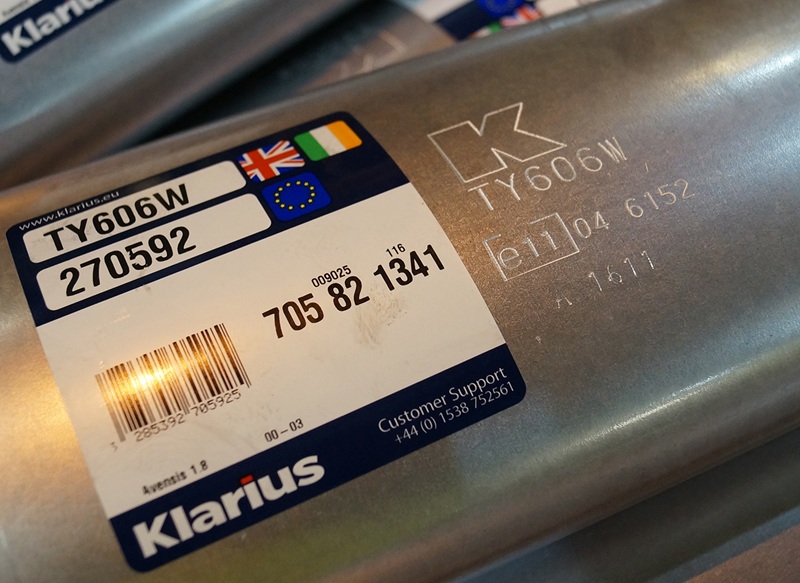
Image 1: A quality, type approved, exhaust system component made by Klarius Products Ltd.
Extensive R&D to achieve OE quality
For Klarius, producing an OE-quality aftermarket component involves considerably more than manufacturing a replacement part to a set of dimensions.
Products are developed around specific vehicle applications and subjected to rigorous engineering and testing. During the testing phase an exhaust must be fitted to the correct type of vehicle and independently assessed by a qualified independent test authority. This provides valuable confirmation that the finished product performs as required in real-world vehicle applications.
This independent testing, known as Type Approval, therefore becomes one part of a much bigger quality process.
It provides independent evidence that the engineering behind the product has been put to the test. For buyers, this means there is something tangible behind the claim that a replacement component is OE equivalent.
Without this level of development and validation, it can be difficult to know what sits behind an aftermarket supplier’s claims. Two products may look broadly similar yet perform very differently once fitted to a vehicle.
A poorly engineered component could be excessively noisy, restrict engine performance, increase fuel consumption or fit poorly. It may also create unwanted resonance or contribute to warning lights, potentially resulting in repeat work and unnecessary vehicle downtime. The initial saving from a cheaper component can quickly disappear if the vehicle has to return to the workshop and take up valuable ramp time.
Quality products, every time
Engineering and testing the first component is only part of the challenge. Buyers also need confidence that every product manufactured will perform in the same way as the product that was originally tested.
This is where manufacturing quality systems, and Conformity of Production become important.
Type approval does not simply focus on a single prototype. Approval authorities audit manufacturing processes to verify that production parts continue to conform to the approved specification. Materials, construction and manufacturing controls must remain consistent, even when a product has been in production for many years.
Klarius already operates to ISO-9001 quality management standards, while Type Approved products are subject to additional independent audits by approval authorities. This ongoing scrutiny helps ensure that the quality engineered into the original product is maintained throughout production and product lifecycle.
For professional buyers, that distinction is important. OE-equivalent quality is not just about producing one excellent component; it is about having the processes and controls in place to reproduce that quality consistently.
Klarius works with respected approval bodies across the UK and Europe, including the UK’s Vehicle Certification Agency (VCA) and TÜV in Germany. These relationships support one of Europe’s largest approved product ranges, giving customers access to components developed and certified to recognised standards across multiple markets.

Image 2: Klarius performs extensive testing to ensure type approval certification can be maintained throughout it’s product range.
Engineering investment behind OE-equivalent products
Producing OE-quality aftermarket parts requires significant investment. Klarius develops more than 300 new products each year and invests over £1 million annually in product development. A significant proportion of this investment goes into engineering, vehicle testing and external certification.
This is an important distinction in an aftermarket where products can appear very similar on the outside.
The work required to develop an OE-equivalent component happens long before the finished product reaches the motor factor or workshop. Engineers need to understand the requirements of the original application, develop the replacement component, test its performance on the vehicle and then establish manufacturing processes capable of reproducing that performance consistently.
Type approval is one of the ways that this work is independently verified.
Why OE equivalence matters commercially
For motor factors and distributors, supplying OE-equivalent products can help reduce warranty claims, customer complaints and reputational risk. It also gives sales teams a stronger answer when customers ask why they should trust one replacement part over another.
For fleet managers, the benefits are reflected in whole-life cost and vehicle availability. A dependable component reduces the risk of repeat work, unexpected warning lights and avoidable downtime or breakdowns. It provides a cost-effective alternative to an original equipment part without asking the operator to take an unnecessary gamble on quality.
Of course, engineering a high-quality product only creates value if that product is available when it is needed. This makes the combination of OE-equivalent performance, broad application coverage and dependable supply particularly important. Buyers need confidence not only that the part will work, but that they can source it quickly when a vehicle needs to return to service.
Quality you can have confidence in
In a crowded aftermarket, products can look similar from a distance. The important differences are often found in the engineering, testing and manufacturing controls behind them.
For Klarius, Type Approval is not the starting point of product quality – it is one of the outcomes of the lengths taken to achieve it.
By investing in product development, vehicle testing, independent certification and controlled production, Klarius aims to manufacture aftermarket components that deliver OE-equivalent quality and performance.
For motor factors, distributors and fleet operators, that means choosing an aftermarket component based on more than price or appearance. It means choosing a product backed by the engineering, testing and quality controls needed to perform as the vehicle manufacturer intended – giving customers greater confidence, fewer problems and more predictable whole-life costs.
Learn more about our type approval processes here
Learn more about the VCA type approval certification standards via it’s website.